Walk down any spice aisle in the US and the cinnamon you'll find is almost certainly cassia. It's cheaper, darker and more strongly flavored. Ceylon cinnamon — often called “true” cinnamon — is a different plant, and for anyone taking cinnamon regularly, the difference matters.
Two plants, one name
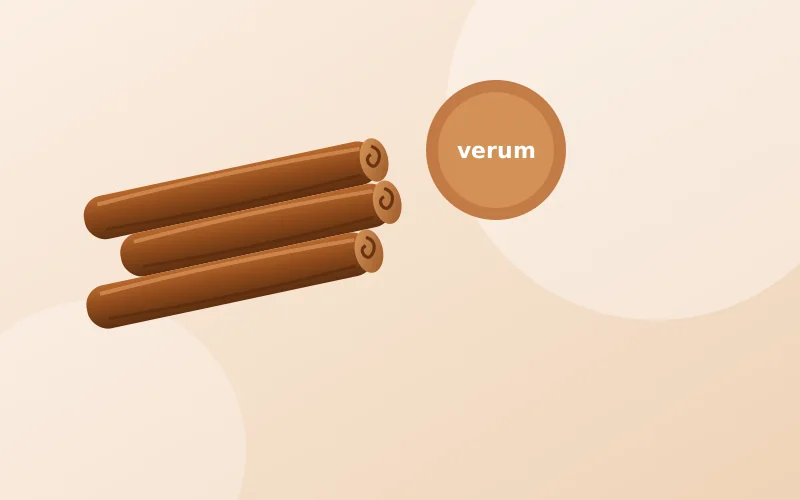
Ceylon cinnamon (Cinnamomum verum) comes from the inner bark of a tree grown mainly in Sri Lanka. Its quills are thin and papery, rolled in many delicate layers, with a light color and a mild, sweet flavor.
Cassia cinnamon (Cinnamomum aromaticum or C. cassia) comes mostly from China and Southeast Asia. Its sticks are thick, hard, single-layer rolls with a darker red-brown color and a sharper taste.
Why coumarin is the key difference
Cassia naturally contains much more coumarin, a plant compound. NIH's National Center for Complementary and Integrative Health notes that coumarin in cassia cinnamon has been associated with liver effects, mainly with long-term use of larger amounts. Ceylon contains only trace amounts, which is one reason it's often preferred for daily use.
What the research says about cinnamon and blood sugar
Cinnamon has been studied many times for blood sugar, and the results are mixed. NCCIH states that it is unclear whether cinnamon supplements are helpful for diabetes, partly because studies often use different species, plant parts and doses. Some meta-analyses report modest improvements in fasting glucose; others find no significant effect. A systematic review focused on Ceylon cinnamon found much of the evidence comes from laboratory and animal studies.
The honest takeaway: cinnamon is a reasonable supporting ingredient in a blood sugar formula, but it isn't a treatment, and the type of cinnamon is worth paying attention to.
How to tell which cinnamon you're getting
- Look for Cinnamomum verum or C. zeylanicum on the label for Ceylon.
- “Cinnamon” with no species on a US product is usually cassia.
- Ceylon sticks crumble easily; cassia sticks are hard.
Why GlycoZen names Ceylon
GlycoZen specifies Ceylon cinnamon as one of its four ingredients, alongside Gymnema Sylvestre, Berberine and Chromium. That choice favors the low-coumarin type for a product meant to be taken every day. Learn more about the full formula on How It Works.
Sources
- NCCIH: Cinnamon
- PubMed: Efficacy and safety of ‘true’ cinnamon in diabetes (systematic review)
- NCCIH: 5 Things To Know About Type 2 Diabetes and Dietary Supplements
More articles
This article is for general education and isn't medical advice. Talk with your health care provider before starting any supplement. *These statements have not been evaluated by the Food and Drug Administration. This product is not intended to diagnose, treat, cure, or prevent any disease.